
Building Topical Authority: Cluster Based Content Strategy for SEO
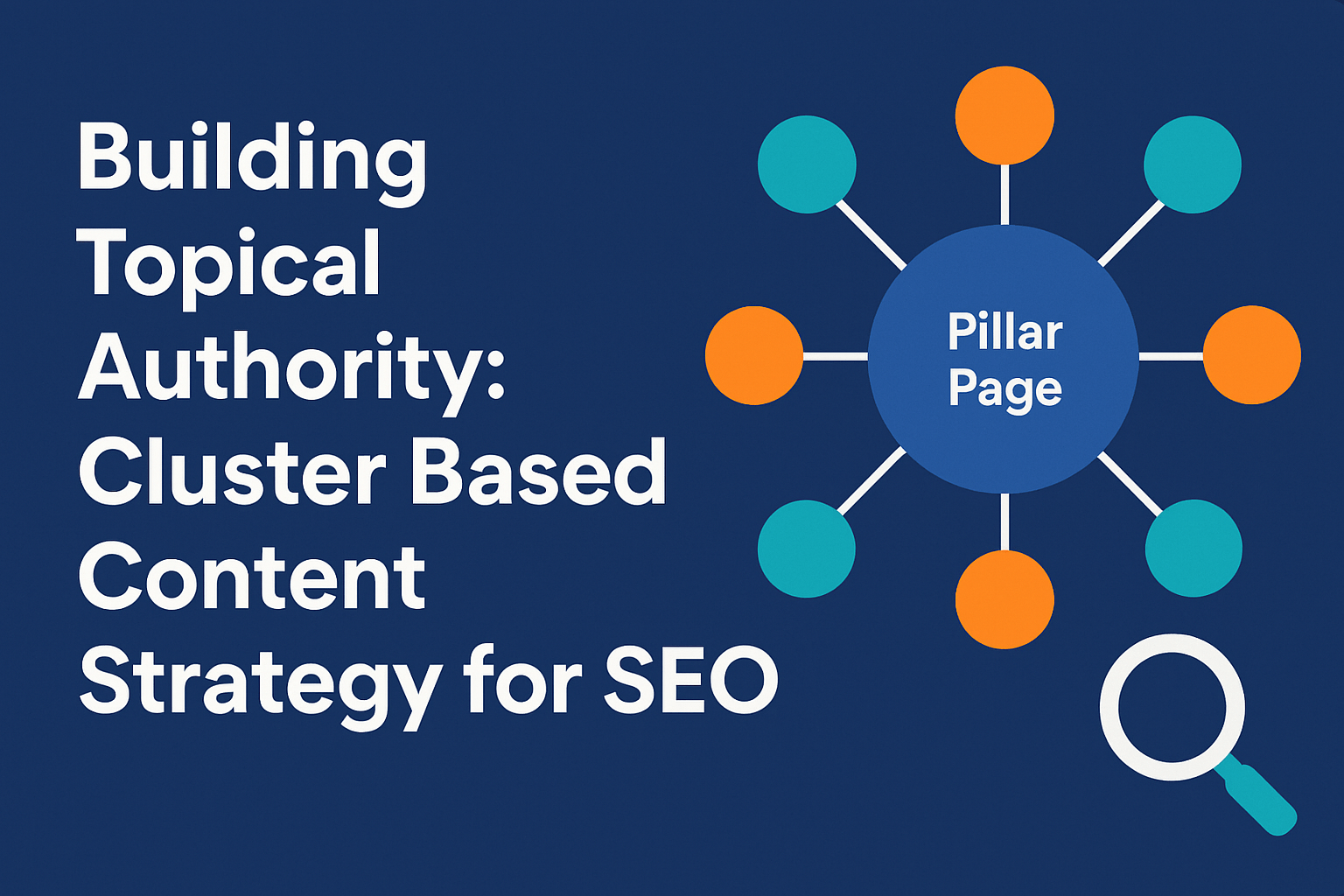
To achieve this, brands must adopt a Content Strategy for SEO that organizes content around themes rather than individual keywords. This is where cluster based content strategy comes into play.
A well-structured cluster strategy helps search engines understand that your website is a trusted authority on a subject not just a publisher of random articles. When implemented correctly, it improves rankings, increases organic traffic, and strengthens internal linking.
This guide explains how to build topical authority using content clusters, pillar pages, and semantic SEO step by step.
What Is Topical Authority in SEO?
Topical authority refers to how search engines perceive your website’s expertise and credibility on a specific subject area.
Instead of ranking pages independently, Google evaluates:
-
Content depth
-
Topic coverage
-
Internal linking structure
-
Semantic relevance
A site with strong Topical Authority SEO signals answers user queries more comprehensively than competitors.
Example:
A website publishing 30 interconnected articles on SEO strategy will outperform a site publishing 100 unrelated blog posts.
Topical authority is not built overnight. It requires a long term Content Strategy for SEO focused on structured content expansion.
Understanding Cluster Based Content Strategy
A cluster-based content strategy organizes content into interlinked topic groups, each centered around a core theme.
Core Components:
-
Pillar Page: A comprehensive guide on a broad topic
-
Cluster Pages: Supporting articles covering subtopics in detail
-
Internal Links: Logical connections between pillar and clusters
This structure helps search engines crawl, index, and rank your content efficiently.
Why Google Prefers Content Clusters SEO
Google’s algorithm uses semantic understanding to determine topic relevance. Content clusters:
-
Improve crawl efficiency
-
Reduce keyword cannibalization
-
Strengthen contextual signals
-
Increase time on site
This approach aligns perfectly with modern Content Strategy for SEO principles.
Pillar Page Strategy: The Foundation of Topical Authority
A pillar page acts as the central hub for a topic cluster. It targets a broad, high-intent keyword and links out to supporting cluster pages.
Characteristics of a Strong Pillar Page Strategy
-
Covers the topic comprehensively
-
Uses clear subheadings
-
Links to every related cluster article
-
Optimized for user intent
Example Pillar Topics:
-
Content Strategy for SEO
-
Technical SEO Guide
-
Local SEO Optimization
Each pillar page should be supported by 8-15 cluster articles to establish topical dominance.
How Cluster Pages Strengthen Content Strategy for SEO
Cluster pages focus on specific subtopics related to the pillar page.
Examples of Cluster Topics:
-
Internal linking best practices
-
Keyword mapping for SEO
-
Semantic search optimization
-
Content pruning techniques
Each cluster page:
-
Targets long-tail keywords
-
Answers a specific search intent
-
Links back to the pillar page
This reinforces topical relationships and strengthens Content Clusters SEO signals.
Internal Linking: The Backbone of Topical Authority SEO
Internal linking is what transforms standalone articles into a powerful SEO ecosystem.
Best Practices for Internal Linking
-
Link from pillar → cluster and cluster → pillar
-
Use descriptive anchor text
-
Avoid excessive linking
-
Maintain logical hierarchy
A strong internal linking structure:
-
Distributes link equity
-
Improves crawlability
-
Signals topical relevance
This is a non negotiable element of any Content Strategy for SEO.
Keyword Research for Cluster Based SEO
Traditional keyword research focuses on search volume. Cluster based SEO focuses on topic coverage.
Keyword Research Process:
-
Identify a core topic
-
Find parent keywords
-
Discover long-tail variations
-
Group keywords by intent
-
Assign them to pillar or cluster pages
Tools to Use:
-
Google Search Console
-
Ahrefs
-
SEMrush
-
AnswerThePublic
Keyword mapping prevents duplication and strengthens Topical Authority SEO.
Search Intent Alignment in Content Clusters
Search intent determines how content should be structured.
Types of Search Intent:
-
Informational
-
Navigational
-
Commercial
-
Transactional
Each cluster page must satisfy one primary intent. Mixing intents reduces relevance and rankings.
Aligning intent correctly improves:
-
Engagement
-
Rankings
-
Conversion rates
This is critical for a scalable Content Strategy for SEO.
Semantic SEO and Entity Based Optimization
Google understands entities—not just keywords.
Semantic SEO Benefits:
-
Improves contextual relevance
-
Helps rank for multiple keywords
-
Supports voice and AI search
How to Optimize for Semantic SEO:
-
Use related terms naturally
-
Answer related questions
-
Include structured data
-
Build topical depth
Semantic optimization strengthens Content Clusters SEO performance.
Content Depth vs Content Length
Long content does not guarantee rankings. Depth does.
A high-ranking page:
-
Answers follow-up questions
-
Covers edge cases
-
Includes examples
-
Provides actionable insights
Each cluster page should fully satisfy user intent without fluff.
Depth signals expertise and reinforces Topical Authority SEO.
Content Updating and Pruning Strategy
Topical authority requires content maintenance.
Best Practices:
-
Update outdated statistics
-
Merge overlapping articles
-
Remove low-value pages
-
Improve internal links
Google favors fresh, accurate, and well maintained content ecosystems.
This keeps your Content Strategy for SEO future-proof.
Measuring Topical Authority Performance
You cannot optimize what you do not measure.
Key Metrics:
-
Organic traffic growth
-
Keyword footprint expansion
-
Crawl frequency
-
Internal link depth
-
Average ranking positions
Tools:
-
Google Analytics
-
Google Search Console
-
Ahrefs Content Gap Tool
Improvement across these metrics confirms successful Pillar Page Strategy execution.
Common Mistakes in Cluster Based SEO
Avoid these pitfalls:
-
Creating clusters without a pillar page
-
Poor internal linking
-
Keyword cannibalization
-
Thin cluster content
-
Ignoring search intent
Each mistake weakens Content Clusters SEO signals.
Cluster Based Content Strategy for AI Search and SGE
AI-driven search engines prioritize:
-
Context
-
Authority
-
Structured content
Topic clusters improve:
-
Featured snippet eligibility
-
AI overview inclusion
-
Voice search visibility
A strong Content Strategy for SEO ensures long term relevance in generative search environments.
Step by Step Framework to Build Topical Authority
Step 1: Choose One Core Topic
Focus narrowly before expanding.
Step 2: Create a Pillar Page
Cover the topic comprehensively.
Step 3: Build Cluster Content
Address every subtopic and question.
Step 4: Interlink Strategically
Reinforce topical relationships.
Step 5: Expand and Update
Continuously strengthen authority.
Why Cluster Based Content Strategy Wins SEO
Ranking on Google today requires more than keywords it demands authority, structure, and relevance.
A well-executed Content Strategy for SEO built on:
-
Topic clusters
-
Pillar pages
-
Internal linking
-
Semantic optimization
creates sustainable rankings, long-term traffic, and brand trust.
By focusing on Topical Authority SEO, businesses can future proof their organic growth and outperform competitors in increasingly competitive SERPs.